Professional Padel Players' Racket Choices: What the Pros Use and Why
Author: Carlos Rodriguez
Author: Carlos Rodriguez
Introduction
Professional padel players represent the pinnacle of the sport, and their equipment choices reflect years of experience, specific performance needs, and often, sponsorship relationships. Understanding what professional players use and why provides valuable insights into high-performance equipment, even if their exact choices may not be right for recreational players.
The relationship between professional players and their rackets is complex. While sponsorships influence some choices, most professionals select equipment that genuinely supports their playing style and performance goals. Their choices reflect optimization for tournament play, specific technique requirements, and the demands of professional competition.
In this comprehensive guide, we'll explore:
- Rackets used by top professional padel players
- Why professionals choose specific rackets and characteristics
- Customization and modifications professionals use
- The relationship between sponsorship and personal preference
- Lessons recreational players can learn from professional choices
- Diamond-shaped rackets for maximum power
- High balance points for leverage
- Hard cores for energy transfer
- Premium materials for performance
- Aggressive shot-making
- Powerful smashes and volleys
- Net-focused play
- Finishing points decisively
- Round or teardrop shapes for control
- Lower balance points for maneuverability
- Softer cores for feel
- Control-optimized designs
- Consistent, precise play
- Defensive positioning
- Placement and angles
- Building points patiently
- Teardrop shapes for balance
- Medium balance points
- Balanced core materials
- Versatile characteristics
- Adaptable playing styles
- Offensive and defensive play
- Versatile shot-making
- All-court effectiveness
- High-intensity competition
- Consistent performance under pressure
- Maximum performance potential
- Reliability in competition
- Match their playing style exactly
- Support their technique
- Optimize their strengths
- Minimize their weaknesses
- Perform at the highest level
- Support advanced techniques
- Provide consistent results
- Enable peak performance
- Require specific racket characteristics
- Demand precise equipment matching
- Benefit from optimization
- Support complex shot-making
- Specific balance points
- Particular weight distributions
- Optimized sweet spot locations
- Customized characteristics
- Their specific technique
- Their playing style
- Their physical attributes
- Their performance goals
- Exceptional physical conditioning
- Strength to handle demanding rackets
- Endurance for long matches
- Ability to use powerful equipment
- Heavier rackets
- More demanding balance points
- Power-focused designs
- Advanced equipment
- Quick recovery between points
- Consistent performance
- Handling physical demands
- Maintaining technique
- Add weight to specific areas
- Remove weight from others
- Optimize overall weight
- Customize balance
- Balance points precisely
- Weight distribution
- Feel characteristics
- Performance optimization
- Individual preferences
- Specific needs
- Optimization goals
- Performance requirements
- Grip size precisely
- Grip texture
- Grip materials
- Grip feel
- Handle shape
- Handle length
- Handle materials
- Handle characteristics
- Perfect fit
- Optimal comfort
- Maximum control
- Best performance
- String patterns (if applicable)
- Surface characteristics
- Frame properties
- Performance characteristics
- Custom rackets for professionals
- Specific modifications
- Personalized equipment
- Optimized performance
- Sponsorship agreements
- Brand partnerships
- Equipment contracts
- Marketing relationships
- Using specific brands
- Promoting equipment
- Wearing brand logos
- Representing brands
- Financial support
- Equipment supply
- Marketing opportunities
- Career support
- Prefer their sponsor's equipment
- Choose based on performance
- Select what works best
- Optimize for their game
- Performance over sponsorship
- Results over contracts
- Optimization over obligation
- Success over marketing
- Available equipment
- Sponsor requirements
- Performance needs
- Optimization goals
- Equipment that works
- Balance between sponsorship and performance
- Solutions that satisfy both
- Optimal arrangements
- Optimize sponsor equipment
- Match personal preferences
- Achieve performance goals
- Satisfy requirements
- Performance results
- Competitive success
- Optimization
- Winning
- Match your playing style
- Support your technique
- Optimize your strengths
- Fit your needs
- Equipment that enhances your game
- Characteristics that support you
- Optimization for your level
- Performance improvement
- What feels right for you
- Equipment you can use effectively
- Characteristics that match you
- Personal preferences
- Use their equipment
- Adapt their technique
- Optimize performance
- Develop their game
- Your skill level
- Your physical abilities
- Your needs
- Your goals
- Start with appropriate equipment
- Progress as skills improve
- Upgrade when ready
- Continue developing
- Professionals have exceptional skills
- Their equipment may be too demanding
- Your needs are different
- Appropriate equipment matters
- Professionals have superior conditioning
- They can handle demanding equipment
- Your physical abilities differ
- Choose accordingly
- Professionals optimize for competition
- You may have different priorities
- Enjoyment matters
- Choose what works for you
- Diamond or high-performance teardrop shapes
- Rackets optimized for power
- Equipment supporting aggressive play
- Characteristics enabling shot-making
- Round or control-focused teardrop shapes
- Rackets optimized for precision
- Equipment supporting defensive play
- Characteristics enabling consistency
- Balanced teardrop shapes
- Versatile racket characteristics
- Equipment supporting adaptability
- Characteristics enabling versatility
- Professional choices reflect optimization: Professionals select rackets that optimize their specific playing style, technique, and performance needs.
- Customization is common: Professional rackets are often customized to match individual preferences and optimize performance.
- Sponsorship and preference interact: While sponsorships influence choices, many professionals genuinely prefer their sponsor's equipment or customize it to match their needs.
- Learn principles, not specifics: Recreational players can learn from professional selection principles but should choose equipment appropriate for their skill level.
- Technique matters more than equipment: Professional success comes from exceptional technique and conditioning, not just equipment choices.
- Match equipment to your needs: Like professionals, choose equipment that matches your playing style, skill level, and preferences.
- Top Padel Racket Brands 2025: A Complete Guide to Major Manufacturers
- Advanced Padel Racket Selection Guide
- How Your Racket Shape Affects Your Playing Technique
- Browse All Rackets
- View All Guides
!Professional Padel Players' Racket Choices: What the Pros Use and Why
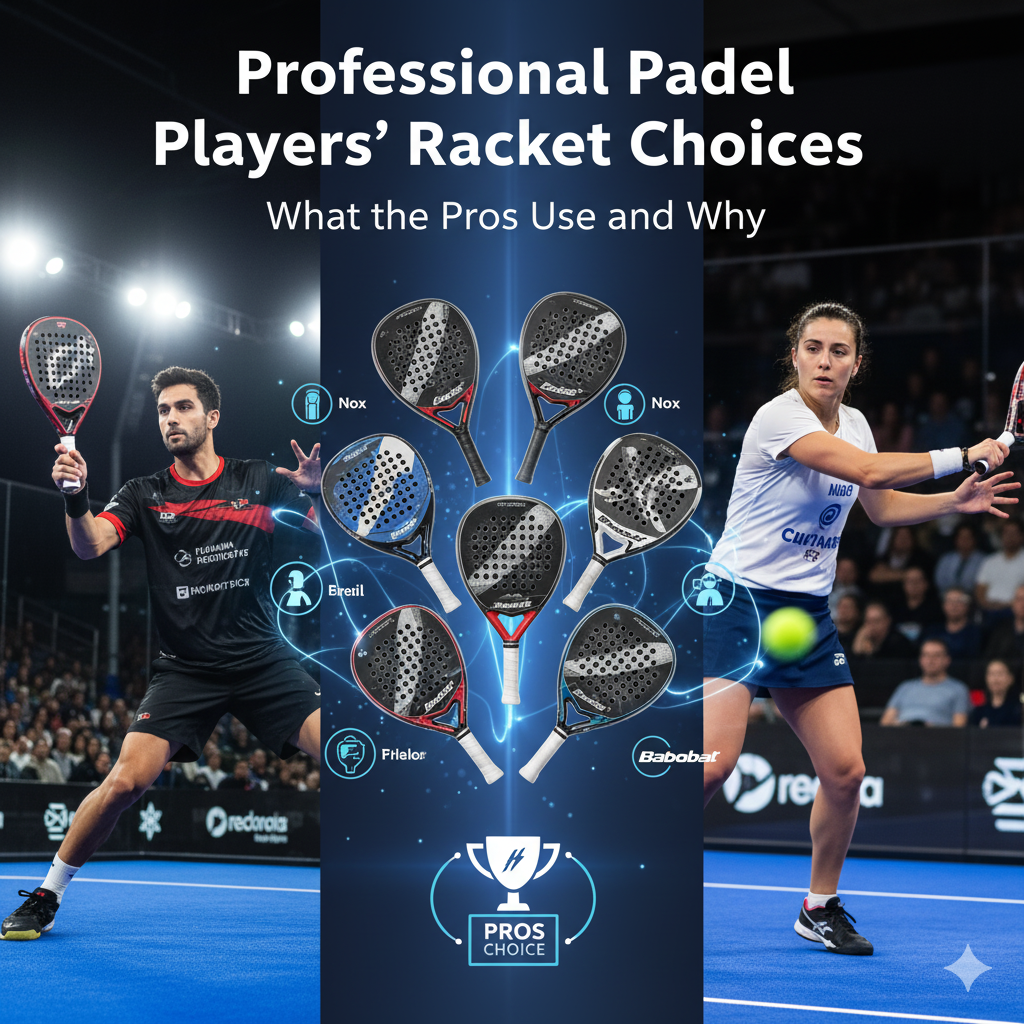
Rackets Used by Top Players
Professional players' racket choices reflect their playing styles, technique requirements, and performance optimization needs.
Power-Focused Professionals
Aggressive Players: Professionals who prioritize power often choose:
Characteristics: These rackets support:
Examples: Many top professionals use diamond or high-performance teardrop rackets optimized for power, though specific models vary by brand and sponsorship.
Control-Focused Professionals
Defensive Players: Professionals who prioritize control often choose:
Characteristics: These rackets support:
Examples: Some top professionals prefer control-focused rackets that support their defensive, consistent playing style.
Versatile Professionals
All-Court Players: Professionals who play versatile styles often choose:
Characteristics: These rackets support:
Examples: Many professionals use teardrop or balanced rackets that support versatile, adaptable playing styles.
Why Professionals Choose Specific Rackets
Professional racket choices reflect specific performance requirements, technique optimization, and playing style needs.
Performance Optimization
Tournament Demands: Professionals need rackets optimized for:
Specific Needs: Professionals choose rackets that:
Performance Requirements: Professional equipment must:
Technique Requirements
Advanced Technique: Professionals have techniques that:
Specialized Needs: Professional techniques may require:
Optimization: Professionals optimize equipment for:
Physical Considerations
Strength and Conditioning: Professionals have:
Physical Attributes: Professionals can handle:
Recovery: Professional conditioning allows:
Customization and Modifications
Professional rackets are often customized to match specific player preferences and optimize performance.
Weight Modifications
Weight Adjustments: Professionals may:
Balance Customization: Professionals customize:
Personal Preferences: Customization reflects:
Grip Customization
Grip Modifications: Professionals customize:
Handle Adjustments: Modifications to:
Personal Fit: Customization ensures:
Performance Modifications
Specific Optimizations: Professionals may modify:
Brand Customization: Some brands provide:
Sponsorship vs Preference
The relationship between sponsorship and personal preference is complex in professional padel.
Sponsorship Influence
Brand Relationships: Professionals often have:
Contractual Obligations: Sponsorships may require:
Financial Considerations: Sponsorships provide:
Personal Preference
Genuine Choices: Many professionals genuinely:
Performance Priority: Professionals prioritize:
Adaptation: Professionals adapt to:
Finding Balance
Compromise: Professionals often find:
Customization: Customization helps:
Results Focus: Ultimately, professionals focus on:
Lessons for Recreational Players
While professional equipment may not be right for recreational players, there are valuable lessons to learn.
Equipment Selection Principles
Match Equipment to Style: Like professionals, choose rackets that:
Performance Optimization: Focus on:
Personal Fit: Prioritize:
Technique Development
Learn from Professionals: Study how professionals:
Adapt to Your Level: Adapt professional approaches to:
Progressive Development: Develop gradually:
Understanding Limitations
Skill Gap: Recognize that:
Physical Differences: Understand that:
Different Goals: Remember that:
Professional Player Examples
While specific racket choices vary by sponsorship and personal preference, patterns emerge in professional equipment selection.
Power-Focused Professionals
Many top professionals who play aggressively choose:
Control-Focused Professionals
Some top professionals who prioritize consistency choose:
Versatile Professionals
Many professionals who play all-court styles choose:
Key Takeaways
Related Content
Conclusion
Professional padel players' racket choices reflect years of experience, specific performance optimization, and the demands of high-level competition. While their exact equipment may not be appropriate for recreational players, understanding their selection principles and customization approaches provides valuable insights.
The key lesson is that professionals optimize equipment to match their playing style, technique, and performance needs—a principle that applies to players at all levels. While you may not need the same equipment as professionals, you can apply the same approach: choose rackets that match your style, support your technique, and optimize your performance.
Remember, professional success comes from exceptional technique, conditioning, and experience, not just equipment. Use professional choices as inspiration and reference, but focus on finding equipment that works for your skill level, playing style, and goals.
Ready to find equipment that matches your needs? Browse our complete racket collection with detailed reviews, ratings, and expert recommendations. Our reviews help you understand how different rackets perform and which characteristics match various playing styles and skill levels.
Your perfect racket is one that helps you play your best—regardless of what professionals use.