When to Replace Your Padel Racket: Signs It's Time for an Upgrade
Author: Carlos Rodriguez
When to Replace Your Padel Racket: Signs It's Time for an Upgrade
Author: Carlos Rodriguez
Introduction
Your padel racket is more than just equipment—it's your partner on the court, helping you execute every shot with precision and power. But like any piece of sports equipment, rackets don't last forever. Knowing when to replace your padel racket can be the difference between playing at your best and struggling with equipment that's holding you back.
Many players hold onto their rackets for too long, either out of sentimentality or uncertainty about when it's time to upgrade. Others replace them too frequently, wasting money on unnecessary purchases. The key is understanding the signs that indicate your racket has reached the end of its effective lifespan.
In this comprehensive guide, we'll explore:
- Physical signs of wear that indicate replacement is needed
- Performance degradation indicators you should watch for
- How to assess whether your racket is limiting your game
- Cost-benefit analysis of repair versus replacement
- Age and usage considerations for different racket types
- Reduce power transfer efficiency
- Create unpredictable ball response
- Potentially break completely during play (safety risk)
- Extreme temperature exposure
- Impact with hard surfaces
- Manufacturing defects that worsen over time
- Change ball response unpredictably
- Reduce spin generation
- Create dead spots on the racket face
- Core material degradation
- Loss of structural integrity
- Surface wear affecting energy transfer
- Surface wear changing ball interaction
- Frame damage affecting balance
- Loss of structural integrity
- Shot placement
- Ball trajectory
- Ability to control the ball
- Material fatigue
- Structural damage
- Loss of vibration dampening
- Improved materials and construction
- Better performance characteristics
- Features that enhance your game
- Feeling limited in power generation
- Wanting more aggressive shot options
- Technique has improved beyond the racket's capabilities
- More power potential (diamond or teardrop shapes)
- Better materials and construction
- Features that support advanced techniques
- [ ] Check frame for cracks, warping, or damage
- [ ] Inspect surface for excessive wear or delamination
- [ ] Examine handle and grip for issues
- [ ] Compare to a new racket of the same model (if possible)
- [ ] Look for any loose components
- Power generation
- Control and accuracy
- Feel and responsiveness
- Consistency of response
- Power output
- Control feel
- Overall performance
- Regular cleaning
- Proper storage
- Grip replacement when needed
- Protection from extreme conditions
- Physical damage requires attention: Cracks, warping, or structural damage almost always mean replacement is necessary for safety and performance.
- Performance degradation is gradual: Loss of power, control, or feel may happen slowly—regular evaluation helps catch issues early.
- Age and usage matter: Casual players' rackets last longer than competitive players', but all rackets degrade over time.
- Repair vs. replace depends on damage type: Grip issues are easily fixed, but frame damage typically requires replacement.
- Skill level changes: As you improve, your racket needs may change—what worked as a beginner may limit you as an intermediate player.
- Regular evaluation prevents surprises: Inspect and test your racket regularly to catch issues before they significantly impact your game.
- The Ultimate Guide to Padel Racket Maintenance
- Best Padel Rackets for Beginners 2025
- Padel Racket Buying Guide: Price Ranges and Value 2025
- Browse All Rackets
- View All Guides
!When to Replace Your Padel Racket - Signs It's Time for an Upgrade
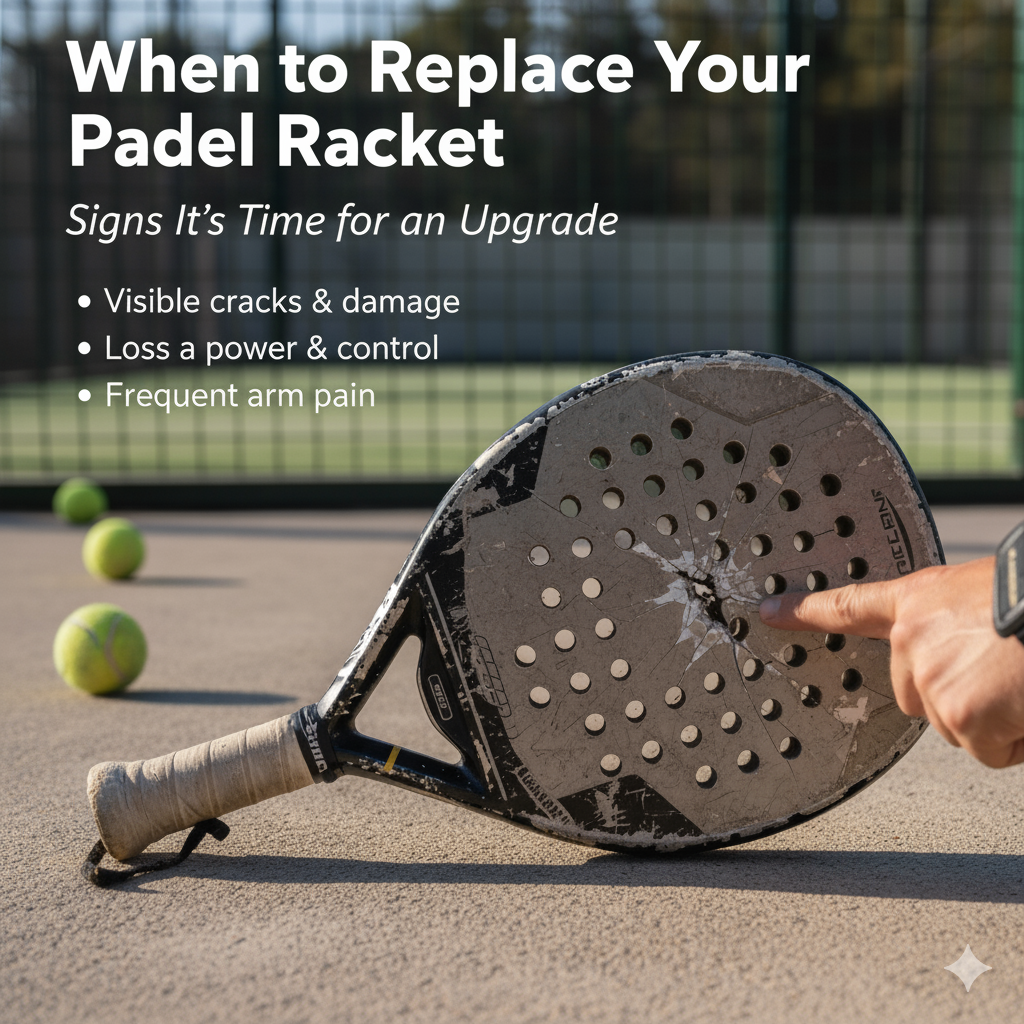
Physical Signs of Wear
The most obvious indicators that your racket needs replacement are visible physical changes. These signs often appear gradually, so regular inspection is crucial.
Frame Damage
The frame is the structural foundation of your racket, and any damage here can significantly impact performance and safety. Look for:
Cracks and Fractures: Even small hairline cracks can compromise the racket's integrity. These often appear near the edges, around the sweet spot area, or at stress points. A cracked frame can:
Frame Warping: If your racket appears bent or warped, especially when viewed from the side, this indicates structural damage. Warping can occur from:
Loose Components: Check for any parts that feel loose or rattling. This includes the handle, any decorative elements, or internal components. Loose parts can affect balance and feel.
Surface Wear
The textured surface of your padel racket is crucial for spin and control. Over time, this surface can degrade:
Excessive Surface Smoothing: The textured surface should maintain its grip on the ball. If large areas feel smooth or polished, you'll lose spin generation. This is particularly problematic in the sweet spot area where most contact occurs.
Deep Scratches or Gouges: While minor scratches are normal, deep gouges that affect the surface integrity can:
Surface Delamination: If you notice the surface material separating from the frame, this is a serious issue that requires immediate attention. Delamination can worsen quickly and affect the entire racket's performance.
Handle and Grip Issues
While grips can be replaced, handle damage often requires racket replacement:
Handle Cracks: Any cracks in the handle area are particularly concerning as they can worsen with use and potentially cause the racket to break during play.
Loose or Damaged Grip Core: If the grip feels unstable or moves independently of the handle, this indicates core damage that may not be repairable.
Performance Degradation Indicators
Sometimes, the signs aren't visible—they're felt in your game. Performance degradation can be subtle, making it easy to attribute poor play to technique rather than equipment.
Loss of Power
One of the most common complaints from players with aging rackets is a noticeable decrease in power. This can manifest as:
Reduced Shot Speed: Shots that used to have good pace now feel weak, even with the same technique. You might find yourself swinging harder to achieve the same results.
Dead Feel: The racket may feel "dead" or unresponsive, especially in the sweet spot. This often indicates:
Inconsistent Power: Some shots feel powerful while others feel weak, even with similar contact. This inconsistency suggests the racket's performance characteristics have changed.
Control Issues
As rackets age, control can deteriorate in several ways:
Unpredictable Ball Response: The ball doesn't go where you expect, even with good technique. This can indicate:
Reduced Spin Generation: If you notice less spin on your shots, the surface texture may have worn down significantly. This affects:
Vibration and Shock: Excessive vibration or shock on contact can indicate internal damage or material fatigue. This not only affects control but can also lead to arm discomfort.
Feel and Feedback Changes
The "feel" of a racket is subjective but important. Changes in feel can indicate problems:
Mushy or Soft Feel: If the racket feels softer or less responsive than it used to, the core material may have degraded. This is common in older rackets or those exposed to extreme conditions.
Harsh or Stiff Feel: Conversely, if the racket feels harsher, this could indicate:
Balance Changes: If the racket feels heavier, lighter, or differently balanced than when you bought it, this suggests material loss or internal damage.
Age and Usage Considerations
Understanding how age and usage affect racket lifespan helps you make informed replacement decisions.
Typical Lifespan Expectations
Casual Players (1-2 times per week): A well-maintained racket should last 2-4 years with proper care. Regular maintenance extends this significantly.
Regular Players (3-4 times per week): Expect 1-2 years of optimal performance, with gradual degradation after that. More frequent play accelerates wear.
Competitive Players (5+ times per week): Rackets may need replacement every 6-12 months, depending on intensity and maintenance. Professional players often replace rackets even more frequently.
Material and Construction Impact
Entry-Level Rackets (€80-€150): Typically use basic materials that may degrade faster. Expect shorter lifespan but lower replacement cost.
Mid-Range Rackets (€150-€250): Better materials and construction mean longer lifespan. These often represent the best value for regular players.
Premium Rackets (€250+): High-quality materials and construction should last longer, but the investment is higher. Proper maintenance is crucial to justify the cost.
Environmental Factors
Storage Conditions: Rackets stored in extreme temperatures, high humidity, or direct sunlight will degrade faster. Proper storage significantly extends lifespan.
Court Surface: Playing on abrasive surfaces can accelerate surface wear. Indoor courts are generally gentler on rackets than outdoor courts.
Climate: High humidity, extreme temperatures, and UV exposure all contribute to material degradation over time.
Cost-Benefit Analysis: Repair vs. Replace
When your racket shows signs of wear, deciding between repair and replacement requires careful consideration.
When Repair Makes Sense
Grip Replacement: This is always worth doing. A new grip costs €5-€15 and can restore feel and control. Replace grips every 3-6 months for optimal performance.
Minor Surface Issues: Small scratches or surface wear don't typically require replacement. Regular cleaning and maintenance can address most surface concerns.
Cosmetic Damage: If damage is purely cosmetic and doesn't affect performance, replacement isn't necessary.
When Replacement is Necessary
Frame Damage: Cracks, warping, or structural damage almost always require replacement. Repair is rarely possible or cost-effective.
Severe Performance Degradation: If the racket no longer performs adequately despite maintenance, replacement is the better investment.
Outdated Technology: Sometimes replacement makes sense even if the racket is functional. Newer rackets may offer:
Calculating Replacement Value
Consider these factors when deciding:
Current Racket Value: How much would you pay for your current racket in its condition? If it's worth very little, replacement makes more sense.
Repair Costs: Compare repair costs to replacement costs. If repairs approach 50% of a new racket's price, replacement is usually better.
Performance Improvement: Will a new racket significantly improve your game? If you've outgrown your current racket's capabilities, an upgrade is worthwhile.
Usage Frequency: Frequent players benefit more from replacement than casual players. If you play rarely, extending your current racket's life makes sense.
How to Assess if Your Racket is Holding You Back
Sometimes the issue isn't obvious damage—it's that your racket no longer matches your skill level or playing style.
Skill Level Mismatch
Outgrown Beginner Racket: If you started with a beginner-friendly racket (typically round shape, high control), you may have outgrown it. Signs include:
Ready for Advanced Equipment: As your skills develop, you may benefit from rackets with:
Playing Style Evolution
Your playing style may have evolved since you bought your racket:
Defensive to Aggressive: If you've become more aggressive, a power-focused racket (diamond shape) might serve you better than your current control-focused racket.
Technique Improvements: Better technique allows you to handle more demanding rackets. If you're consistently hitting the sweet spot, you can benefit from rackets with smaller sweet spots but more power.
Physical Changes: Improved fitness, strength, or flexibility may mean you can handle rackets you couldn't before.
Performance Plateau
If you've hit a performance plateau, your equipment might be the limiting factor:
Consistent Technique, Limited Results: If your technique is solid but results aren't improving, your racket may be holding you back.
Unable to Execute Desired Shots: If you can't generate the power or control you want despite good technique, a different racket might help.
Frustration with Equipment: Sometimes the best indicator is simply feeling that your racket is limiting you, even if you can't pinpoint exactly how.
Testing and Evaluation Process
Before making a replacement decision, conduct a thorough evaluation:
Visual Inspection Checklist
Performance Testing
On-Court Evaluation: Play several sessions focusing on:
Comparison Testing: If possible, test a new racket (same model or similar) to compare:
Professional Assessment: Consider having your racket evaluated by a professional or at a racket shop. They can identify issues you might miss.
Maintenance Review
Before replacing, ensure you've maintained the racket properly:
If maintenance has been poor, improving it might extend the racket's life significantly.
Key Takeaways
Related Content
Conclusion
Knowing when to replace your padel racket is a crucial skill that balances performance, safety, and budget considerations. While it's tempting to hold onto a favorite racket, recognizing the signs of wear and performance degradation ensures you're always playing with equipment that supports your best game.
Regular inspection, honest performance evaluation, and understanding the relationship between usage, maintenance, and lifespan will help you make informed replacement decisions. Remember, a well-timed racket replacement isn't just about fixing problems—it's an opportunity to upgrade to equipment that matches your current skill level and playing style.
Ready to find your next racket? Browse our complete racket collection with detailed reviews, ratings, and expert recommendations. Whether you're replacing due to wear or upgrading to match your improved skills, we'll help you find the perfect racket for your game.
Your racket is your partner on the court—make sure it's one that helps you play your best.