The Ultimate Guide to Padel Racket Maintenance: Keep Your Racket Performing Like New in 2025
Author: Carlos Rodriguez
Author: Carlos Rodriguez
Introduction
Your padel racket is your most important piece of equipment on the court. Whether you've invested in a premium racket or found the perfect budget-friendly option, proper maintenance is essential to preserve its performance and extend its lifespan. Many players overlook this crucial aspect, leading to premature wear, reduced performance, and unnecessary replacement costs.
In this comprehensive guide, we'll cover everything you need to know about maintaining your padel racket in 2025. You'll learn:
- Daily and weekly maintenance routines
- How to clean and protect your racket properly
- Storage best practices to prevent damage
- When to replace grips, strings, and other components
- Common mistakes that shorten racket lifespan
- Professional maintenance tips from experts
- Excessive impact with hard surfaces
- Extreme temperature changes
- Prolonged exposure to moisture
- Improper storage
- Generating spin on the ball
- Controlling shot placement
- Creating different shot effects
- Reduce control and feel
- Cause blisters and discomfort
- Lead to racket slippage during play
- Sweat and oils from your hands
- Court dust and debris
- Moisture that can cause damage
- Cracks or chips in the frame
- Loose or damaged grip tape
- Surface wear or damage
- Any unusual sounds when tapping the frame
- Mold and mildew growth
- Material degradation
- Unpleasant odors
- Use a soft brush to remove embedded dirt
- Clean with mild soap and water if needed
- Dry completely with a soft towel
- Never submerge the racket in water
- Check the grip for wear, tears, or excessive dirt
- Clean with a damp cloth if needed
- Consider replacement if it's showing significant wear
- Check for hairline cracks or stress points
- Inspect the edges for chips or damage
- Ensure all components are secure
- Extreme heat: Car trunks, direct sunlight, or near heaters can warp the frame
- Extreme cold: Freezing temperatures can make materials brittle
- Rapid temperature changes: Can cause materials to expand and contract, leading to cracks
- A dry, well-ventilated area
- Away from bathrooms or damp basements
- With silica gel packets in your racket bag to absorb moisture
- Store in a protective racket bag or case
- Keep the racket in a vertical position when possible
- Avoid stacking heavy objects on top
- Use a racket press or frame protector for long-term storage
- Soft cloth for cleaning
- Extra grip tape
- Racket press (optional but recommended)
- Silica gel packets for moisture control
- Visible wear or tears
- Loss of tackiness
- Unpleasant odor that won't wash out
- Slippage during play
- Discomfort or blisters
- Deep scratches or gouges may affect performance
- Excessive wear in the sweet spot area
- Loss of surface texture
- Visible cracks in the frame
- Loss of structural integrity
- Significant performance degradation
- Frame warping or bending
- Play competitively
- Own premium rackets
- Notice any performance changes
- Want to maximize racket lifespan
- Frame integrity testing
- Surface restoration
- Grip replacement and customization
- Performance optimization
- Regular cleaning
- Grip replacement
- Basic inspections
- Storage management
- Frame repairs
- Surface restoration
- Performance optimization
- High-value rackets
- Daily care is essential: A quick wipe-down after each session prevents long-term damage
- Proper storage matters: Temperature and humidity control significantly extend racket life
- Replace grips regularly: Every 3-6 months maintains optimal feel and control
- Inspect regularly: Early detection of damage prevents costly replacements
- Avoid common mistakes: Harsh chemicals, extreme temperatures, and ignoring damage shorten lifespan
- Professional help when needed: For serious players or high-end rackets, annual professional inspection is worth it
- Complete Racket Buying Guide
- Understanding Racket Shapes and Their Impact
- Browse All Rackets
- View All Guides
!The Ultimate Guide to Padel Racket Maintenance: Keep Your Racket Performing Like New in 2025
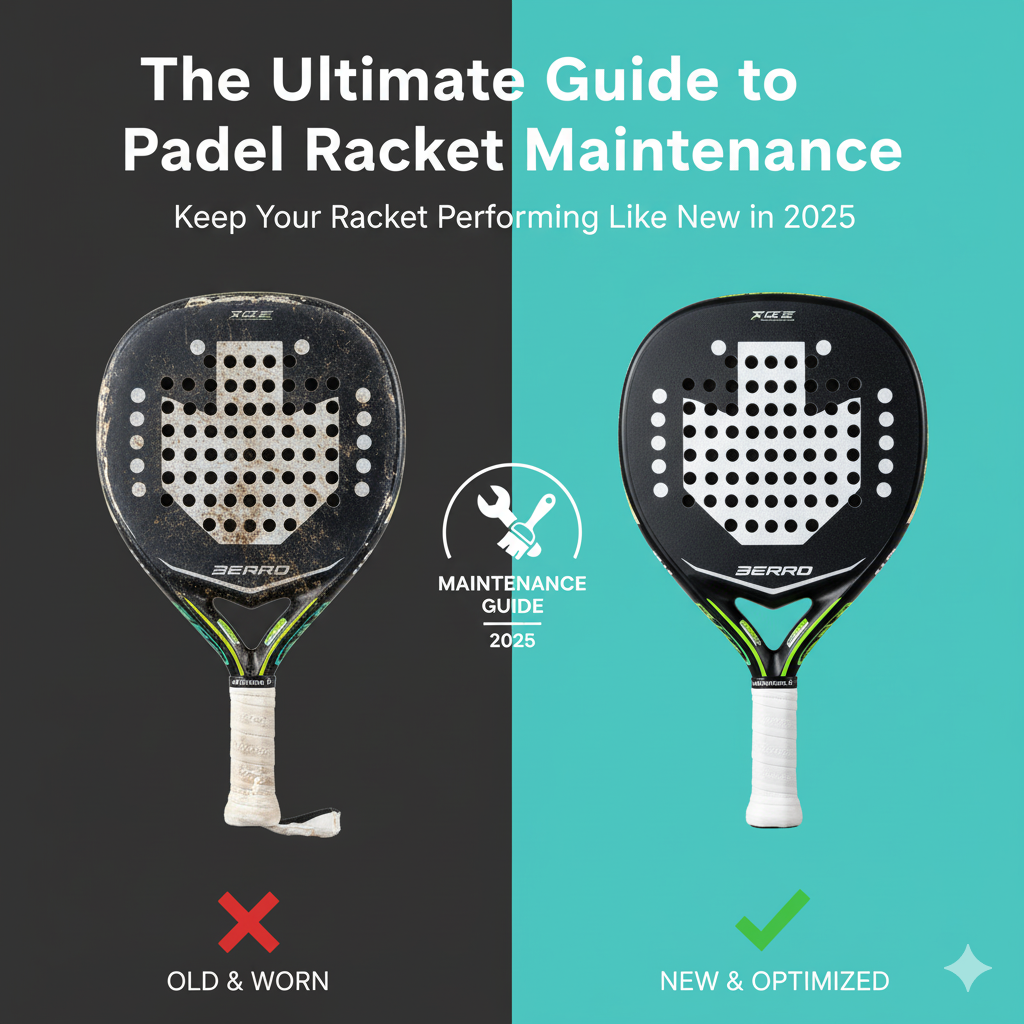
Understanding Your Racket's Components
Before diving into maintenance routines, it's important to understand the key components of your padel racket and how they're affected by regular use.
The Frame
The frame is the heart of your racket, typically made from carbon fiber, fiberglass, or composite materials. Modern rackets use advanced materials that are both lightweight and durable, but they still require proper care. The frame can be damaged by:
The Surface
Padel rackets feature a textured surface that provides spin and control. This surface can wear down over time, especially if you play frequently on abrasive courts. The surface texture is crucial for:
Regular cleaning helps maintain the surface texture and prevents dirt buildup that can affect performance.
The Grip
The grip is one of the most frequently replaced components. It's in constant contact with your hands, absorbing sweat and oils. A worn grip can:
Most grips should be replaced every 3-6 months, depending on how frequently you play.
Daily Maintenance Routine
Establishing a daily maintenance routine is the foundation of racket care. These quick steps take just a few minutes but significantly extend your racket's lifespan.
After Each Session
1. Wipe Down the Surface
After every match or practice session, use a soft, damp cloth to wipe down the racket surface. This removes:
Avoid using harsh chemicals or abrasive materials that could damage the surface texture.
2. Check for Damage
Take 30 seconds to inspect your racket for:
Early detection of issues can prevent more serious damage.
3. Air Dry
Never store your racket in a closed bag while it's still damp. Allow it to air dry completely before storing. This prevents:
Weekly Deep Clean
Once a week, perform a more thorough cleaning:
1. Surface Cleaning
2. Grip Inspection
3. Frame Inspection
Storage Best Practices
How you store your racket between sessions is just as important as how you maintain it during use. Proper storage prevents damage and maintains performance.
Temperature Considerations
Padel rackets should be stored in a temperature-controlled environment. Avoid:
Ideal storage temperature: Room temperature (18-24°C / 65-75°F)
Humidity Control
Moisture is one of the biggest enemies of racket longevity. Store your racket in:
Storage Position
Best practices:
Racket Bag Essentials
Your racket bag should contain:
When to Replace Components
Understanding when to replace various components helps maintain optimal performance and prevents unexpected failures during play.
Grip Replacement
Signs it's time to replace:
Frequency: Every 3-6 months for regular players, or sooner if you notice any of the above signs.
Surface Maintenance
The racket surface doesn't typically need replacement, but it does require care:
If surface damage is severe, consider consulting with a racket specialist or replacing the racket.
Frame Replacement
Consider replacement if:
A damaged frame can be dangerous and should be replaced immediately.
Common Maintenance Mistakes to Avoid
Many players unknowingly shorten their racket's lifespan through common mistakes. Here's what to avoid:
Mistake 1: Using Harsh Cleaning Chemicals
Problem: Strong detergents, bleach, or solvents can damage the racket surface and frame materials.
Solution: Use only mild soap and water, or specialized racket cleaning products.
Mistake 2: Storing in Extreme Conditions
Problem: Leaving rackets in cars, garages, or other areas with temperature extremes.
Solution: Always store in a climate-controlled environment.
Mistake 3: Ignoring Small Damage
Problem: Small cracks or chips can quickly become major issues.
Solution: Address minor damage immediately or consult a professional.
Mistake 4: Over-tightening Grip Tape
Problem: Excessive tension when applying grip tape can stress the handle.
Solution: Apply grip tape with moderate, even tension.
Mistake 5: Playing with a Damaged Racket
Problem: Continuing to use a racket with visible damage can worsen the problem and be unsafe.
Solution: Stop using damaged rackets immediately and have them inspected or replaced.
Professional Maintenance Tips
For serious players or those with high-end rackets, professional maintenance can extend lifespan and maintain performance.
Annual Professional Inspection
Consider having your racket professionally inspected once a year, especially if you:
Professional Services Available
DIY vs. Professional
DIY maintenance is sufficient for:
Professional services recommended for:
Key Takeaways
Related Content
Conclusion
Proper padel racket maintenance is an investment in both your equipment and your game. By following these maintenance routines and best practices, you'll keep your racket performing at its best for years to come, saving money on replacements and ensuring consistent performance on the court.
Remember, a well-maintained racket is a reliable partner in your padel journey. Take a few minutes after each session to care for your equipment, and it will reward you with consistent performance and longevity.
Ready to find your perfect racket or upgrade your current one? Browse our complete racket collection with detailed reviews, ratings, and the best prices available.