Best Padel Rackets for Beginners 2025
Author: Carlos Rodriguez
Best Padel Rackets for Beginners 2025
Author: Carlos Rodriguez
Introduction
Starting your padel journey is exciting, but choosing your first racket can feel overwhelming. With hundreds of models available, each promising different benefits, how do you know which one will help you learn and improve?
This comprehensive guide will walk you through everything you need to know about selecting your first padel racket. We'll explain what makes a racket beginner-friendly, which features matter most for new players, and recommend specific models that offer the best value for those just starting out. By the end of this guide, you'll understand:
- Why control matters more than power when you're learning
- How racket shape affects your learning curve
- What features to prioritize in your first racket
- Which specific rackets offer the best beginner experience
- How to test and choose the right racket for you
- Have experience with other racket sports (tennis, squash, etc.)
- Are physically strong and can handle slightly more demanding rackets
- Want a racket they can grow into as their skills improve
- Smallest sweet spots, requiring precise contact
- High balance points that demand strong technique
- Lower control ratings that assume you can compensate with skill
- Reduce arm fatigue during long sessions
- Allow faster reactions at the net
- Make it easier to maintain proper technique
- Help you develop swing speed naturally
- Better vibration dampening for comfort
- More control and touch on shots
- Forgiving feel that helps with learning
- Reduced risk of arm strain
- Quality rackets from reputable brands
- All the features beginners need
- Good durability for learning
- Room to upgrade later without feeling wasteful
- You're committed to learning and playing regularly
- You want a racket that will last 2-3 years
- You prefer higher-quality materials and construction
- You want a racket from a premium brand
- Round shape optimized for control and forgiveness
- High control rating for precise shot placement
- Excellent maneuverability for quick reactions
- Lightweight design reduces arm fatigue
- Great value for beginner players
- Round shape with large sweet spot
- High control rating for accurate shots
- Good maneuverability for responsive play
- Comfortable feel encourages longer practice sessions
- Excellent build quality for the price
- Round shape for maximum control
- Outstanding control rating for precise placement
- Large sweet spot for error forgiveness
- Comfortable construction reduces arm strain
- Great option for developing technique
- Round shape with control focus
- High control rating for accurate shots
- Professional-level construction quality
- Excellent maneuverability
- Premium feel and performance
- Your technique has become consistent and reliable
- You feel limited by your current racket's power or features
- You're playing more competitively and need specialized performance
- You've been playing for 2+ years and your game has significantly improved
- Hit various shots (forehand, backhand, volleys, serves)
- Play for at least 15-20 minutes to feel how it performs over time
- Compare multiple rackets side-by-side if possible
- Pay attention to comfort, control, and how it feels in your hands
- Padel Clubs: Many clubs have demo rackets or rental programs
- Sports Stores: Larger stores often have demo programs
- Friends: Try rackets owned by friends or fellow players
- Tournaments: Some tournaments have brand booths with demo rackets
- Round shapes offer the best learning experience: They provide the largest sweet spot and highest control, making them ideal for developing technique
- Prioritize control and comfort over power: As a beginner, you need forgiveness and ease of use, not maximum power
- Lighter, balanced rackets are easier to learn with: Aim for 360-370g with low to medium balance
- Don't overspend on your first racket: €80-€150 is the sweet spot for beginner rackets
- Test rackets when possible before buying: Personal feel matters, and trying before buying helps you find the right match
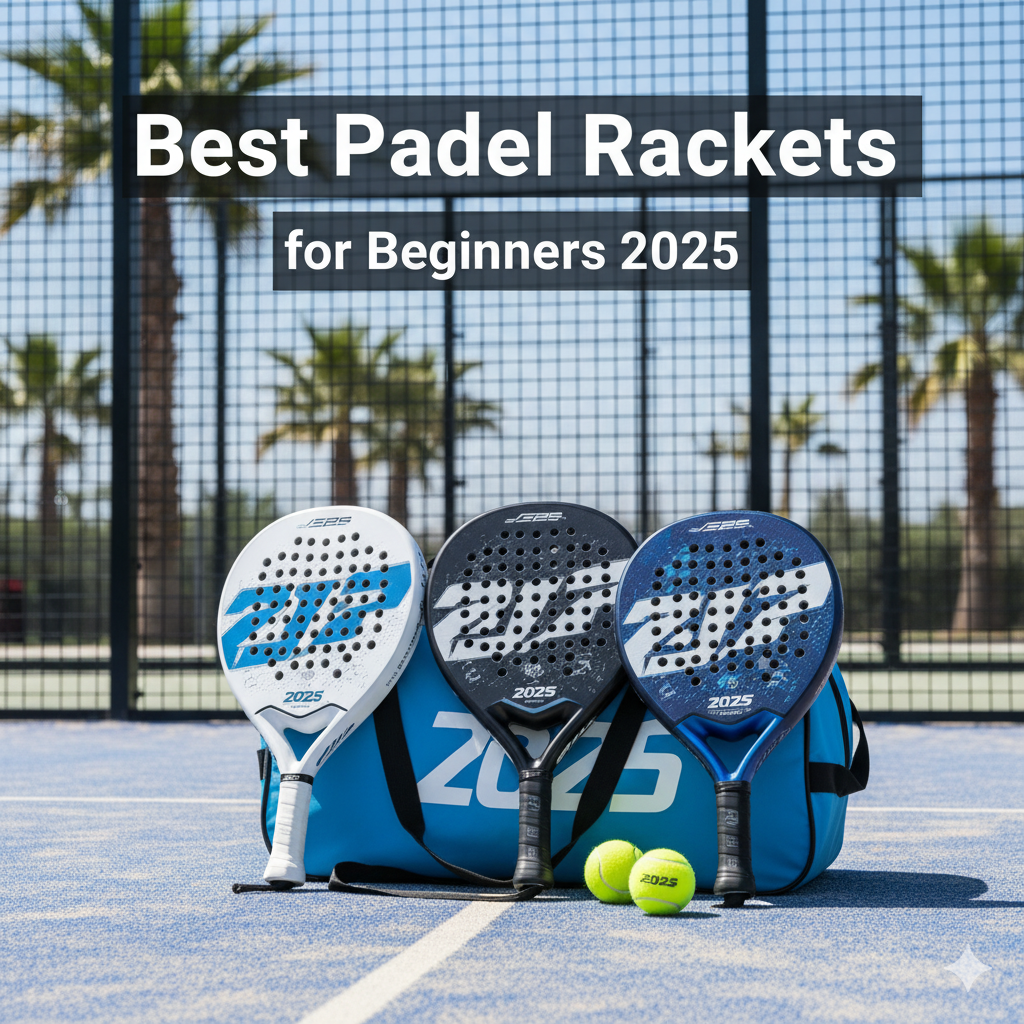
!Best Padel Rackets for Beginners 2025
Understanding Beginner Needs
When you're just starting out in padel, your priorities are different from experienced players. While advanced players might seek maximum power or precision, beginners need something entirely different: forgiveness and ease of use.
Why Control Matters More Than Power
As a beginner, you're still developing your technique. You're learning how to position yourself, how to swing, and how to make contact with the ball consistently. At this stage, a racket that offers too much power can actually hinder your development. Powerful rackets require precise technique to control—something you're still building.
Instead, you need a racket that helps you place the ball where you want it, even when your technique isn't perfect. High control ratings mean the racket responds predictably to your swing, helping you learn what works and what doesn't. Every successful shot builds confidence, and confidence accelerates learning.
The Importance of Forgiveness
A forgiving racket has a large sweet spot—the area on the racket face where you get the best results. When you're learning, you won't hit the ball in the perfect spot every time. A large sweet spot means even slightly off-center hits still produce decent shots. This forgiveness keeps you in rallies longer, giving you more practice time and more opportunities to improve.
How Racket Weight Affects Learning
Lighter rackets are easier to maneuver, which is crucial when you're still developing your swing mechanics. A racket that feels heavy will tire your arm quickly, leading to poor technique as you compensate for fatigue. Lighter rackets (typically 360-370g) allow you to focus on proper form rather than fighting the weight of the racket.
Why Comfort and Ease of Use Are Crucial
Your first racket should feel comfortable in your hands. Discomfort distracts from learning and can lead to bad habits. Look for rackets with soft cores that absorb vibration, reducing arm fatigue and making long practice sessions more enjoyable. Comfortable rackets encourage more play, and more play means faster improvement.
Best Racket Shapes for Beginners
Padel rackets come in three main shapes: round, teardrop, and diamond. Each shape offers different characteristics, and for beginners, the choice is clear.
Round Shapes: Why They're Ideal for Beginners
Round-shaped rackets are the best choice for beginners, and here's why:
Largest Sweet Spot: Round rackets have the largest sweet spot of all three shapes. This means you have more room for error when making contact with the ball. Even if your timing isn't perfect, you'll still get decent results, which keeps you playing and learning.
Best Control and Forgiveness: The round shape places the sweet spot higher on the racket face, making it easier to control your shots. You'll find it simpler to place the ball where you want it, even with developing technique. This control helps you learn proper shot placement and build confidence.
Easiest Power Generation: While round rackets don't offer the maximum power of diamond shapes, they make it easier to generate power with less effort. This is perfect for beginners who are still building arm strength and swing technique. You'll be able to hit effective shots without needing perfect form.
Excellent Maneuverability: Round rackets typically have lower balance points, making them easier to swing and maneuver. This helps you react quickly at the net and develop your volley game, which is essential in padel.
Teardrop Shapes: When They Might Work
Teardrop-shaped rackets offer a balance between power and control. They might work for beginners who:
However, teardrop rackets have smaller sweet spots than round rackets, requiring more precision. For most true beginners, round is still the better choice.
Diamond Shapes: Why to Avoid (For Now)
Diamond-shaped rackets are designed for advanced players seeking maximum power. They have:
As a beginner, a diamond racket will make learning harder, not easier. You'll struggle with consistency, and every mistake will be magnified. Save diamond rackets for when you've developed solid fundamentals—they'll be waiting for you when you're ready.
Key Features to Look For
When shopping for your first padel racket, focus on these specific features that will support your learning:
Balance: Low to Medium for Easier Handling
Balance refers to where the weight is distributed in the racket. Low-balance rackets have more weight in the handle, making them easier to swing and maneuver. Medium-balance rackets offer a compromise. High-balance rackets put weight in the head, increasing power but requiring more strength and technique.
For beginners, low to medium balance is ideal. These rackets feel lighter in your hands and are easier to control, especially during quick exchanges at the net.
Weight: Lighter Rackets (360-370g) for Better Maneuverability
Standard padel rackets range from about 360g to 380g. As a beginner, aim for the lighter end of this range (360-370g). Lighter rackets:
Core Material: Soft EVA Cores for Comfort and Control
The core is the internal material of the racket. Soft EVA (ethylene-vinyl acetate) cores provide:
Harder cores offer more power but less control and comfort—save those for later.
Surface: Fiberglass or Carbon Fiber Mix for Durability
The surface material affects durability and feel. Fiberglass surfaces are softer and more forgiving, while carbon fiber is stiffer and more powerful. A mix of both offers a good balance. For beginners, fiberglass or fiberglass-dominant mixes provide the best combination of durability and comfort.
Grip Size: Proper Grip Sizing for Comfort
Grip size matters more than many beginners realize. A grip that's too large makes the racket harder to control, while one that's too small can cause you to grip too tightly, leading to tension and poor shots.
Most rackets come in standard grip sizes. If possible, try holding different sizes to find what feels most comfortable. You should be able to wrap your fingers around the grip with a small gap between your thumb and index finger.
Budget Considerations
Your first racket doesn't need to break the bank. In fact, spending too much on your first racket often isn't the best choice.
Entry-Level Price Range (€80-€150)
Most beginners should look in the €80-€150 range. At this price point, you'll find:
What You Get at Different Price Points
€80-€100: Basic materials, functional performance, good for very casual players or those unsure about commitment to padel.
€100-€130: Better materials, improved construction, excellent value for serious beginners.
€130-€150: Premium beginner rackets with advanced materials, often from top brands. Best choice if you're committed to learning and want a racket that will last.
When It's Worth Investing a Bit More
Consider spending toward the higher end of the beginner range (€130-€150) if:
Value Picks That Offer Great Performance
The best value beginner rackets offer excellent control and comfort without premium pricing. Look for models that prioritize beginner-friendly features over advanced technology you won't use yet.
Top Recommended Rackets for Beginners
Based on our analysis of beginner needs and current market offerings, here are some excellent rackets that match beginner-friendly criteria. These rackets feature round shapes, high control ratings, and excellent maneuverability—perfect for developing your technique.
Adidas ADIDAS CROSS IT LIGHT 3.4 2025
!Adidas ADIDAS CROSS IT LIGHT 3.4 2025
Why we recommend it: The Adidas ADIDAS CROSS IT LIGHT 3.4 2025 is an excellent choice for beginners seeking control and forgiveness. Its round shape provides a large sweet spot, making it easier to make consistent contact with the ball even as you're developing your technique.
Key features:
Starvie STARVIE BRAVA 2025
Why we recommend it: The Starvie STARVIE BRAVA 2025 combines excellent control with beginner-friendly characteristics. Its round shape and balanced design make it perfect for players developing their technique while building confidence in their game.
Key features:
Starvie STARVIE VESTA 2024
Why we recommend it: The Starvie STARVIE VESTA 2024 offers outstanding control characteristics that help beginners learn proper shot placement. Its forgiving nature and comfortable feel make it ideal for players prioritizing precision and consistency.
Key features:
Nox NOX ML10 PRO CUP ROUGH SURFACE EDITION BY MIGUEL LAMPERTI
!Nox NOX ML10 PRO CUP ROUGH SURFACE EDITION BY MIGUEL LAMPERTI
Why we recommend it: Despite being a professional model, the Nox NOX ML10 PRO CUP ROUGH SURFACE EDITION BY MIGUEL LAMPERTI offers excellent control characteristics that can benefit beginners. Its round shape and high control rating make it forgiving enough for developing players while offering room to grow.
Key features:
What to Look For
When choosing your first racket, prioritize these features:
Round Shape: Round rackets offer the largest sweet spot and highest control, making them ideal for developing technique. Look for rackets with a round shape designation.
High Control Rating (70+): A control rating of 70 or higher means the racket responds predictably to your swing, helping you learn what works and what doesn't.
Good Maneuverability (75+): Higher maneuverability ratings mean the racket feels lighter and easier to swing, reducing arm fatigue during long practice sessions.
Large Sweet Spot (75+): A sweet spot rating of 75 or higher provides forgiveness on off-center hits, keeping you in rallies longer and giving you more practice time.
Comfortable Price Point: In the €80-€150 range, you'll find quality rackets with all the features beginners need without breaking the bank.
Browse our complete racket collection to see all available options, filter by shape and ratings, and find the perfect racket for your learning journey. Each racket listing includes detailed specifications, expert reviews, and current prices to help you make an informed decision.
Common Beginner Questions
How Long Should a Beginner Racket Last?
A good beginner racket should last 2-3 years with regular play. This gives you plenty of time to develop your skills before needing an upgrade. Quality rackets in the €130-€150 range are built to withstand the learning process and regular use.
When Should You Upgrade?
Consider upgrading when:
Most beginners should stick with their first racket for at least 1-2 years to fully develop their fundamentals.
Can You Start with an Advanced Racket?
While you can technically start with any racket, advanced rackets (especially diamond shapes) will make learning significantly harder. They require precise technique you haven't developed yet, leading to frustration and slower improvement. Starting with a beginner-friendly racket accelerates your learning and makes the game more enjoyable.
How Many Rackets Do You Need?
For beginners, one racket is sufficient. You don't need multiple rackets until you're playing competitively or have specific needs for different playing conditions. Focus on finding one good racket that supports your learning, then add to your collection later if needed.
Testing and Trying Rackets
How to Test a Racket Before Buying
If possible, try rackets before purchasing. Many clubs and stores offer demo programs or rental options. When testing:
What to Feel For During Testing
Comfort: The racket should feel comfortable immediately, not something you need to "get used to."
Control: Can you place shots where you intend? Does the racket respond predictably?
Maneuverability: Does it feel quick and responsive, or heavy and slow?
Power: Is power generation easy, or do you need to swing very hard?
Sweet Spot: How forgiving is it when you don't hit perfectly?
Where to Try Rackets
If you can't test before buying, stick with reputable brands and models with good reviews from other beginners.
Key Takeaways
Conclusion
Choosing your first padel racket is an important decision, but it doesn't need to be complicated. Focus on control, comfort, and forgiveness—features that support learning rather than showcase advanced technology. Round-shaped rackets with high control ratings offer the best foundation for developing your game.
When choosing your first racket, focus on round shapes with high control ratings (70+), good maneuverability (80+), and large sweet spots (80+). These characteristics will make your learning journey enjoyable and effective, helping you develop proper technique while building confidence with every successful shot.
Ready to find your perfect beginner racket? Browse our complete racket collection to see all available options, or check out our other buying guides for more expert advice as your game develops.
Remember, the best beginner racket is one that feels comfortable in your hands, helps you learn proper technique, and makes you want to keep playing. Start with the right foundation, and you'll be enjoying advanced rackets before you know it.