Padel Racket Grip Replacement Guide: When and How to Change Your Grip
Author: Carlos Rodriguez
Padel Racket Grip Replacement Guide: When and How to Change Your Grip
Author: Carlos Rodriguez
Introduction
The grip is one of the most overlooked components of a padel racket, yet it's the only part that's in constant contact with your hands during every shot. A worn or improperly sized grip can significantly impact your performance, causing loss of control, discomfort, and even injury. Many players continue using grips long past their optimal lifespan, not realizing how much this small component affects their game.
Replacing your grip is one of the simplest and most cost-effective ways to improve your racket's feel and performance. Unlike other racket components that require professional service or racket replacement, grip replacement is something any player can do themselves with minimal tools and time investment.
In this comprehensive guide, we'll cover:
- Signs that indicate you need a new grip
- Types of grips available and their characteristics
- Step-by-step instructions for replacing your grip
- Grip customization options for optimal comfort and performance
- How grip choice affects your game and playing experience
- Regular players (3-4 times per week): Every 3-4 months
- Competitive players (5+ times per week): Every 2-3 months
- Casual players (1-2 times per week): Every 4-6 months
- Thinner than replacement grips
- Easy to apply and remove
- Good for sweat absorption
- Can be changed frequently
- Adds minimal thickness
- Tacky overgrips: Provide extra grip and stickiness
- Absorbent overgrips: Excellent for sweaty hands
- Cushioned overgrips: Add extra comfort and shock absorption
- Thicker than overgrips
- More durable
- Complete grip replacement
- Various materials and textures
- Longer-lasting
- Synthetic grips: Durable, consistent, good value
- Leather grips: Premium feel, excellent durability, traditional
- Cushioned grips: Extra comfort and shock absorption
- Performance grips: Optimized for specific playing styles
- Specialized features
- Targeted performance benefits
- May cost more
- Specific use cases
- Anti-vibration grips: Reduce shock and vibration
- Moisture-wicking grips: Excellent for sweaty hands
- Extra-cushioned grips: Maximum comfort
- Performance grips: Optimized for power or control
- New grip (overgrip or replacement grip)
- Scissors or utility knife
- Clean cloth
- Optional: grip tape or finishing tape
- Clean, flat surface
- Good lighting
- Adequate space to work
- Unwind the old grip carefully
- Note the direction it was wrapped (for reference)
- Clean the handle if needed
- Remove any adhesive residue
- Begin at the bottom of the handle
- Leave a small tab (about 1-2 cm) at the start
- Angle the grip slightly (about 45 degrees)
- Wrap the grip around the handle, overlapping each turn by about 1/3 to 1/2
- Keep consistent tension—not too tight, not too loose
- Maintain the angle as you wrap upward
- Overlap each turn consistently
- Keep the grip smooth and wrinkle-free
- Maintain even tension throughout
- When you reach the top, cut the grip at an angle
- Use the finishing tape (usually included) to secure the end
- Smooth any wrinkles or bubbles
- Check for any wrinkles or loose areas
- Ensure the grip feels comfortable and secure
- Test the grip by holding the racket
- Ensure the handle is clean and dry
- Remove any old grip material completely
- Check for any damage to the handle
- Begin at the bottom of the handle
- Leave a small tab at the start
- Angle the grip (typically 45 degrees)
- Wrap upward, overlapping each turn
- Maintain consistent tension
- Keep the grip smooth and even
- At the top where the handle flares, adjust the angle
- Continue wrapping smoothly
- Maintain overlap and tension
- Cut the grip at an appropriate angle
- Secure the end with tape or the grip's adhesive
- Ensure a secure, professional finish
- Add an overgrip (adds minimal thickness)
- Use a thicker replacement grip
- Add grip buildup tape under the grip
- Use multiple overgrips (not recommended for long-term)
- Use a thinner replacement grip
- Remove buildup tape if present
- Consider a smaller base grip size (if available)
- Hold the racket comfortably
- Maintain control without excessive grip pressure
- Feel the racket and ball contact
- Avoid discomfort or strain
- Good for players who want maximum hold
- Excellent in dry conditions
- May feel sticky to some players
- Good for players who prefer less texture
- Easier to adjust grip during play
- May require more grip pressure
- Good for sweaty hands
- Provide secure hold
- May feel rough to some players
- Players with hand or wrist issues
- Those who prefer softer feel
- Shock and vibration reduction
- Players who want maximum feel
- Those who prefer direct racket connection
- Enhanced control and feedback
- Textured grips provide better hold, especially when sweaty
- Smooth grips allow easier grip adjustments
- The right texture for you depends on your hand condition and preferences
- Thicker grips can reduce feel but increase comfort
- Thinner grips enhance feel but may be less comfortable
- Finding the right balance is key
- Loss of texture reduces secure hold
- Slippage affects shot consistency
- Fresh grips restore optimal control
- Excessive grip pressure (leading to tension and fatigue)
- Hand and wrist strain
- Blisters and calluses
- Loss of control from gripping too tightly
- Reduces shock and vibration
- Prevents hand fatigue
- Protects against impact
- Enhances comfort during long sessions
- Discomfort and blisters
- Hand fatigue
- Loss of secure hold (requiring more grip pressure)
- Potential injury from slippage
- Full commitment to shots
- Maximum power generation
- Consistent shot execution
- Confidence in racket control
- Precise shot placement
- Consistent contact
- Better ball control
- Enhanced performance
- Restores optimal performance
- Enhances confidence
- Improves shot consistency
- Supports your best play
- Sweat and oils
- Dirt and debris
- Court dust
- Moisture
- Use mild soap and water if needed
- Allow to dry completely
- Avoid harsh chemicals that can damage the grip
- Never store a damp racket
- Air dry in a well-ventilated area
- Avoid direct heat sources
- Use a racket bag or case
- Avoid extreme temperatures
- Keep away from direct sunlight
- Maintain proper humidity levels
- Excessive moisture
- Extreme temperatures
- Direct sunlight (UV damage)
- Abrasive surfaces
- Based on playing frequency
- Before important matches or tournaments
- When signs of wear appear
- As part of regular racket maintenance
- Replace when performance degrades
- Change before discomfort develops
- Update when grip condition affects play
- Maintain optimal grip condition
- Regular replacement is essential: Grips should be replaced every 2-6 months depending on playing frequency, or when signs of wear appear.
- Signs of wear are clear: Slippage, loss of texture, tears, discomfort, and performance issues all indicate replacement is needed.
- Grip types serve different needs: Overgrips offer easy replacement and sweat absorption, while replacement grips provide complete refresh and durability.
- Proper application matters: Consistent tension, proper overlap, and smooth application ensure optimal grip performance and feel.
- Customization optimizes performance: Grip size, texture, and cushioning can be adjusted to match your preferences and needs.
- Maintenance extends lifespan: Regular cleaning, proper storage, and timely replacement keep your grip performing optimally.
- The Ultimate Guide to Padel Racket Maintenance
- When to Replace Your Padel Racket
- Best Padel Rackets for Beginners 2025
- Browse All Rackets
- View All Guides
!Padel Racket Grip Replacement Guide: When and How to Change Your Grip
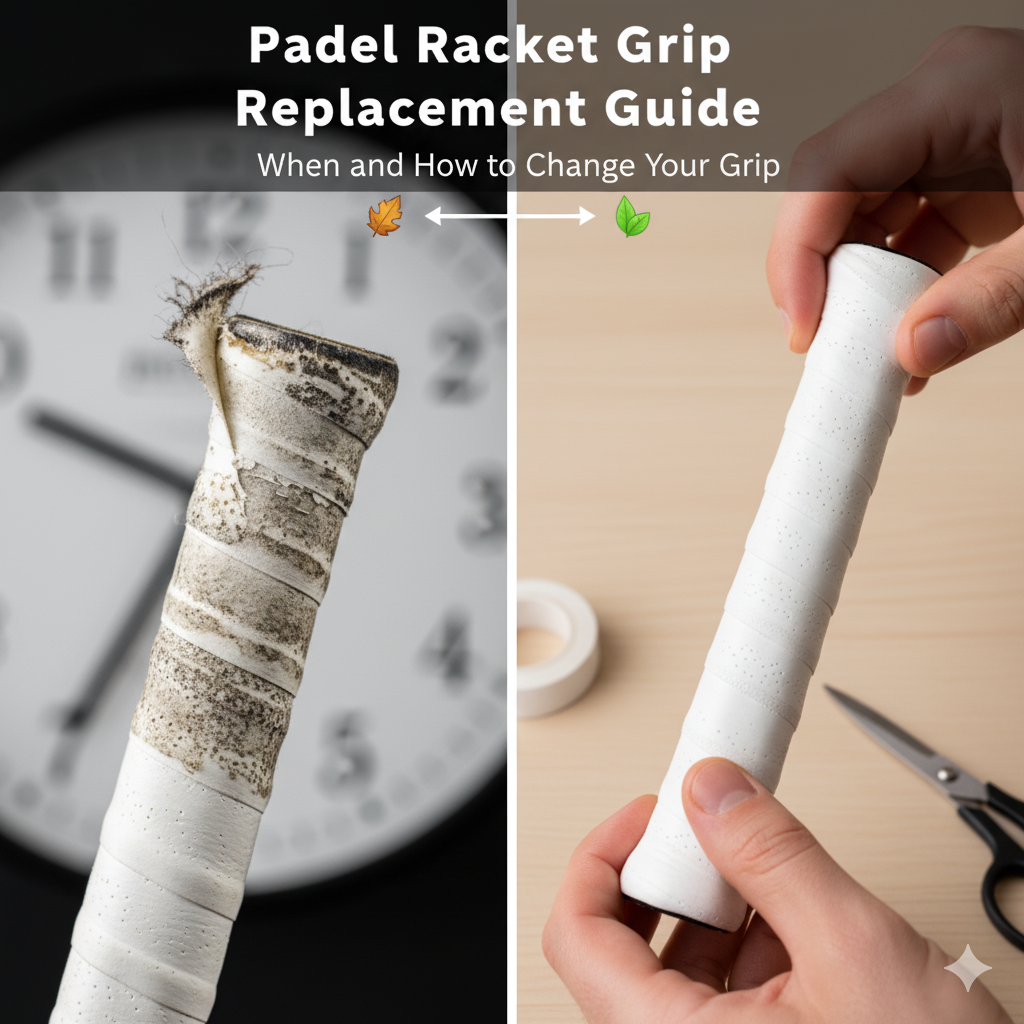
Signs You Need a New Grip
Recognizing when your grip needs replacement is crucial for maintaining optimal performance and comfort. The signs can be subtle at first but become more obvious as the grip deteriorates.
Visible Wear Indicators
Worn or Smooth Surface: A grip that has lost its texture and feels smooth or polished indicates significant wear. The original tackiness and grip texture are essential for maintaining control, especially when your hands are sweaty.
Tears or Holes: Any visible damage to the grip material—tears, holes, or significant thinning—means replacement is necessary. These issues can worsen quickly and affect your ability to hold the racket securely.
Discoloration: While some discoloration is normal, excessive darkening or staining that won't clean off suggests the grip has absorbed too much sweat and oils and may have lost its effectiveness.
Loose or Shifting Grip: If the grip moves or shifts during play, it's not providing the secure hold you need. This can be dangerous and definitely requires replacement.
Performance Indicators
Slippage During Play: If the racket slips in your hands, especially during powerful shots or when your hands are sweaty, the grip has lost its ability to provide secure hold. This is one of the most critical signs.
Loss of Feel: A worn grip can create a "dead" feeling, reducing your ability to sense the racket and ball contact. This affects control and shot placement.
Discomfort or Blisters: An old, worn grip can cause discomfort, blisters, or calluses. A fresh grip with proper texture and cushioning should feel comfortable.
Inconsistent Grip Feel: If different parts of the grip feel different—some areas smooth, others textured—this inconsistency affects your ability to maintain consistent grip pressure and control.
Time-Based Indicators
Age of Grip: Even without visible wear, grips should be replaced regularly:
Frequency of Play: More frequent play accelerates grip wear. If you've increased your playing frequency, consider replacing your grip more often.
Environmental Factors: Playing in hot, humid conditions or with sweaty hands accelerates grip deterioration and may require more frequent replacement.
Types of Grips Available
Understanding the different types of grips helps you choose the right replacement for your needs and preferences.
Overgrips
Description: Thin grips that wrap over your existing grip, providing additional cushioning, texture, and sweat absorption.
Characteristics:
Best For: Players who want easy replacement, good sweat absorption, and the ability to change grips frequently without removing the base grip.
Popular Types:
Replacement Grips
Description: Full replacement grips that replace your entire grip, providing a complete refresh of the grip system.
Characteristics:
Best For: Players who want a complete grip refresh, prefer thicker grips, or have worn base grips that need replacement.
Popular Types:
Specialty Grips
Description: Grips designed for specific needs or preferences.
Characteristics:
Popular Types:
Step-by-Step Grip Replacement Instructions
Replacing a grip is straightforward with the right technique. Follow these steps for a professional-quality result.
Preparation
Gather Materials:
Prepare Your Workspace:
Remove Old Grip (for replacement grips):
Applying an Overgrip
Step 1: Start at the Bottom
Step 2: Wrap Upward
Step 3: Continue Wrapping
Step 4: Finish at the Top
Step 5: Final Adjustments
Applying a Replacement Grip
Step 1: Prepare the Handle
Step 2: Start Wrapping
Step 3: Wrap with Consistent Overlap
Step 4: Handle the Flare
Step 5: Finish Securely
Tips for Best Results
Consistent Tension: Maintain even tension throughout wrapping—too tight can compress the grip, too loose can create wrinkles.
Proper Overlap: Overlap each turn by about 1/3 to 1/2 of the grip width for optimal coverage and feel.
Smooth Application: Work out any wrinkles or bubbles as you wrap to ensure a smooth, comfortable finish.
Secure Finish: Make sure the end is securely taped to prevent unwrapping during play.
Grip Customization Options
Customizing your grip allows you to optimize comfort, control, and performance for your specific needs.
Grip Size Adjustment
Increasing Grip Size: If your grip feels too small:
Decreasing Grip Size: If your grip feels too large:
Finding Your Ideal Size: The right grip size allows you to:
Texture and Feel Customization
Tacky Grips: Provide extra grip and stickiness:
Smooth Grips: Provide a clean, smooth feel:
Textured Grips: Provide enhanced grip through texture:
Cushioning Options
Standard Cushioning: Normal grip thickness and cushioning for most players.
Extra Cushioning: Additional padding for:
Minimal Cushioning: Thinner grips for:
How Grip Affects Performance
Understanding how grip choice affects your game helps you make informed decisions about grip selection and replacement.
Control and Feel
Grip Texture: The texture of your grip directly affects your ability to maintain control:
Grip Thickness: Thickness affects feel and control:
Grip Condition: A worn grip reduces control:
Comfort and Injury Prevention
Proper Grip Size: The right grip size prevents:
Cushioning: Adequate cushioning:
Grip Condition: A worn grip can cause:
Power and Performance
Grip Security: A secure grip allows:
Grip Feel: Good feel enables:
Grip Condition: A fresh, properly sized grip:
Maintenance and Care
Proper maintenance extends your grip's lifespan and maintains optimal performance.
Regular Cleaning
After Each Session: Wipe down your grip with a damp cloth to remove:
Weekly Deep Clean: For more thorough cleaning:
Drying: Always allow grips to dry completely:
Storage Considerations
Proper Storage: Store your racket in a way that protects the grip:
Grip Protection: Protect your grip from:
Replacement Timing
Regular Replacement: Replace grips on a schedule:
Proactive Replacement: Don't wait for complete failure:
Key Takeaways
Related Content
Conclusion
Your padel racket grip is a small component with a big impact on your performance and comfort. Regular replacement and proper maintenance ensure you're always playing with optimal grip condition, supporting your best performance on the court.
Whether you choose overgrips for easy replacement or replacement grips for complete refresh, understanding when and how to replace your grip is an essential skill for any serious padel player. The investment in fresh grips is minimal compared to the performance and comfort benefits.
Remember, a good grip should feel secure, comfortable, and provide the control you need. Don't wait for complete failure—replace your grip proactively to maintain optimal performance.
Ready to improve your racket's feel and performance? Browse our complete racket collection with detailed reviews and expert recommendations. And don't forget—maintaining your grip is just as important as choosing the right racket.
Your grip is your connection to your racket—keep it fresh, and it will keep you playing your best.